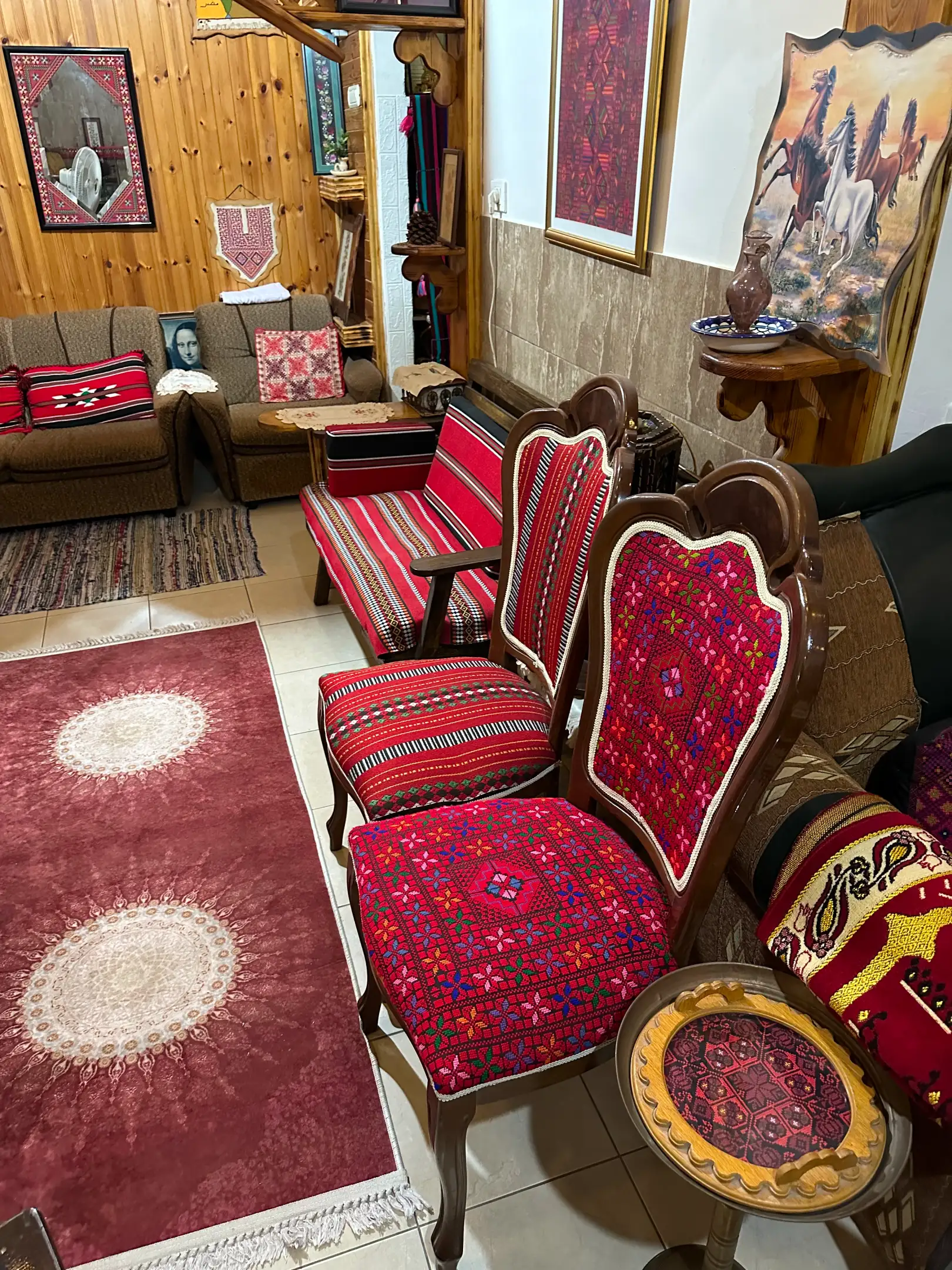
Dheisheh Camp home interior, West Bank.

Photo: Nizar ALayasa, 2024

Home Beautification and Hope: Stories from Palestinian Refugees in the West Bank

  • Home beautification
  • neuroaesthetics
  • aesthetics
  • third-realm beauty
  • built environment
  • trauma-informed
  • Dheisheh
  • Al-Azza
  • agency
  • dignity
  • postmemory
  • psychosocial wellbeing
  • community resilience
  • participatory research
  • Palestinian refugee camps

Summary

This presentation at the Refugee Care Conference explored how home beautification supports psychosocial wellbeing, resilience, and hope among Palestinian refugees in protracted displacement in the West Bank. Drawing on Dr. Neumark’s research-creation with forcibly displaced individuals, desk research examining beautification across displacement contexts, and 30 community-driven dialogues led by Palestinian storyteller Nizar ALayasa in Dheisheh and Al-Azza refugee camps, the presentation centred Palestinian voices and experiences. Nizar pre-recorded a video introduction in Arabic with English subtitles, modelling how to centre lived experience and create accessible presentation formats that honour participants’ voices and agency despite language barriers. Using a trauma-informed framework and neuroaesthetics research by Dr. Curt Thompson, findings demonstrated that beautification practices including gardening, embroidery, and spatial personalisation help residents occupy themselves positively, create peace and stability, exercise agency, and process complex emotions that cannot be put into words. Residents shared how they brought soil and trees from pre-1948 homes, using physical objects to sustain “postmemory” across generations, honour past homes while remaking home in displacement, and express their rights to a decent environment. The presentation argued that aesthetics in the built environment are not superficial but, as Arthur Danto asserts, a necessary condition for life itself.

Key Takeaways

Centring Palestinian voices through participatory methodology is vital to dignity-centred refugee research and practice. Nizar ALayasa, a Palestinian storyteller and trusted community member, led 30 dialogues in residents’ gardens and homes in Dheisheh and Al-Azza camps, and pre-recorded a video introduction in Arabic with English subtitles for the conference presentation. This approach modelled how to honour lived experience, create accessible presentation formats despite language barriers, and position refugees as knowledge holders and co-presenters rather than research subjects.

Beautification practices ground displaced individuals in the present moment, reducing anxiety and enabling hope for the future. Palestinian residents described how caring for flowers “occupies us positively,” creates “a sense of peace and stability,” and provides “mental peace” and “relaxation.” Dr. Curt Thompson’s neuroaesthetics research explains that beautification activities prevent anxiety about the past by keeping individuals present, and the more time spent free from anxiety, the more one can imagine a different future.

Simple acts of beautification provide agency and therapeutic processing when control has been stripped away. Using basic tools like scissors, watering cans, and coloured leaves, residents create beauty and infuse spaces with their own identity and taste. Professor Susan Brison’s trauma theory suggests that these acts shift focus from “what has been done to me” to “what I have done and can do,” supporting post-traumatic growth. Hand embroidery, gardening, and spatial personalisation allow residents to process complex emotions and stress that cannot be put into words.

Physical objects from pre-1948 homes sustain intergenerational resilience through “postmemory.” Residents shared how their parents brought soil and prickly pear trees from evacuated villages, keeping memories alive across generations who never lived in the original homes. Marianne Hirsch’s concept of postmemory explains how second and third generation trauma survivors absorb memories from parents and grandparents. Children who participate in beautification efforts show increased coping mechanisms and wellbeing, and connecting past homes with present beautification practices supports healing, preserves identity, and enables younger generations to remake home while honouring collective history.

Home beautification is an expression of human rights and dignity, not superficial decoration. As resident Asmaa Izghari stated, “organizing and caring for the house is an expression of our rights as refugees inside the camps to have a decent environment… From my point of view, there is nothing more.” Beautification practices uphold cultural identity, build community resilience and social capital, and assert the right to live with dignity and aesthetic pleasure even in protracted displacement. The message “there is nothing more” emphasizes that creating beauty is foundational, not frivolous.

Implications for Practitioners

  • Position refugees as expert advisors in policy development: Policymakers and humanitarian organisations should engage displaced individuals as expert advisors and co-designers of refugee response policies, not merely as beneficiaries or consultation subjects. Policy development processes should prioritise lived experience by compensating refugees for their expertise, creating accessible participation formats (such as video presentations in participants’ own languages), and ensuring that those most affected by policies have decision-making power in their design.
  • Centre lived experience in research, advocacy, and conference spaces: Researchers, practitioners, and conference organisers should create accessible presentation formats that honour linguistic diversity and agency, such as pre-recorded videos in participants’ own languages with subtitles. This approach, modelled by Nizar ALayasa’s Arabic video introduction, positions refugees as knowledge holders and co-presenters rather than research subjects, ensuring their voices and perspectives shape how their experiences are understood and shared.
  • Integrate beautification into trauma-informed psychosocial support: Mental health and protection professionals should incorporate hands-on aesthetic practices such as gardening, embroidery, and spatial personalisation into therapeutic programming. These activities ground individuals in the present moment, reduce anxiety about past trauma, provide agency when control has been stripped away, and allow processing of complex emotions that cannot be put into words.
  • Support intergenerational healing through postmemory practices: Community wellbeing programs should recognise how beautification connects generations through postmemory, allowing families to honour past homes while remaking home in displacement. Practitioners should support children’s participation in beautification efforts, facilitate intergenerational storytelling through physical objects and spatial practices, and understand that preserving identity across generations strengthens resilience and healing.
  • Remove restrictions that prevent personalisation and self-expression: Camp management and shelter actors should eliminate policies that restrict residents from gardening, painting, decorating, and modifying their living spaces. Recognising that home beautification expresses the right to a decent environment and that creating beauty is foundational to dignity, practitioners should actively enable rather than constrain residents’ efforts to infuse spaces with their own identity, taste, and cultural practices.